
Affiliate link — commission earned at no extra cost to you.
Affiliate link — commission earned at no extra cost to you.
Video Review — Coming Soon
PM2.5 particulate matter, VOCs, carbon monoxide, humidity, and temperature — all in one small unit.
Green, yellow, or red gives an at-a-glance read without opening an app.
Phone notifications or Echo announcements when air quality drops, so you're not checking manually.
Trigger air purifiers, fans, or dehumidifiers automatically when readings change — no other hub needed.
The air quality monitor market is honestly a mess for consumers — a lot of the affordable options, especially the ones flooding Amazon, have a reputation for being inaccurate or just kind of made-up-feeling in what they report. I settled on Amazon's own version mostly because it was reasonably priced, monitored the things I actually cared about, and worked with Alexa, which I already have a couple of devices for even though I'm not big into the whole smart-home thing.
The real motivation was living in the Midwest, where the air does something strange during fall and winter, combined with being surrounded by farms within about ten miles of the house. I also deal with sinus and allergy issues, so having some localized sense of what's actually happening with the air — rather than just trusting a regional forecast — felt worth the price of admission.
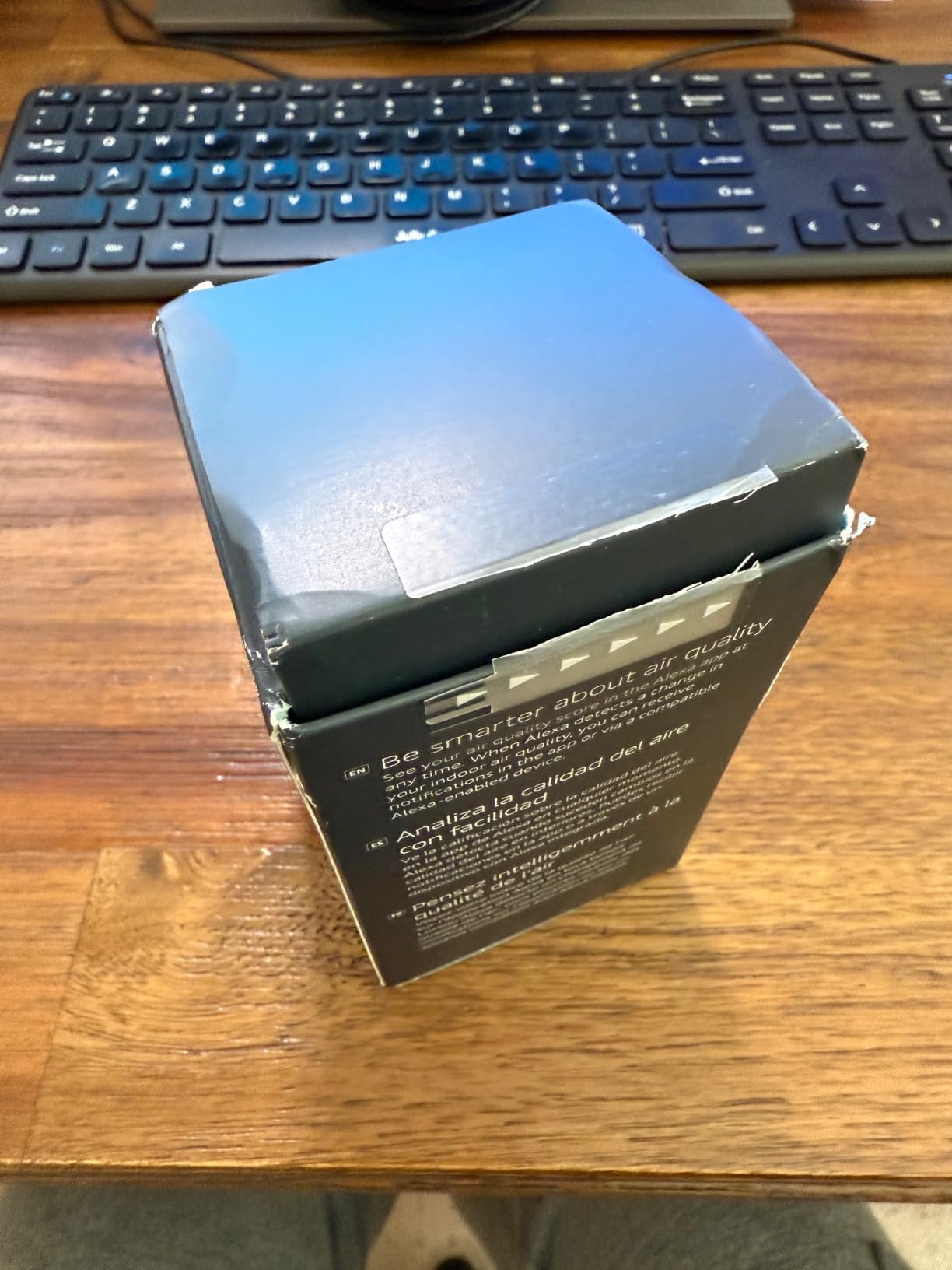
Simple retail packaging — nothing complicated in the box.
Setup was quick — a few minutes through the Alexa app and it was reporting readings almost immediately. If you already have an Echo device around, there's genuinely nothing to figure out here. If you don't use Alexa at all, you're not completely locked out — the unit still gives you a basic sense of air quality through its color-coded light (green, yellow, red) without any app involved. But you lose all the detail, alerts, and history that make this actually useful day to day.

Small footprint — sits comfortably on a desk or shelf.
This is where the device earns its keep. Within minutes of any activity that actually affects indoor air — dust from sanding, strong-smelling cleaning products, cigarette smoke — the reading shifts and the light changes color to match. It's not just for show; it settles back down again once the air clears. For anyone with allergies or sinus sensitivity, that kind of real-time feedback is genuinely valuable, even if you don't fully trust the exact numbers.
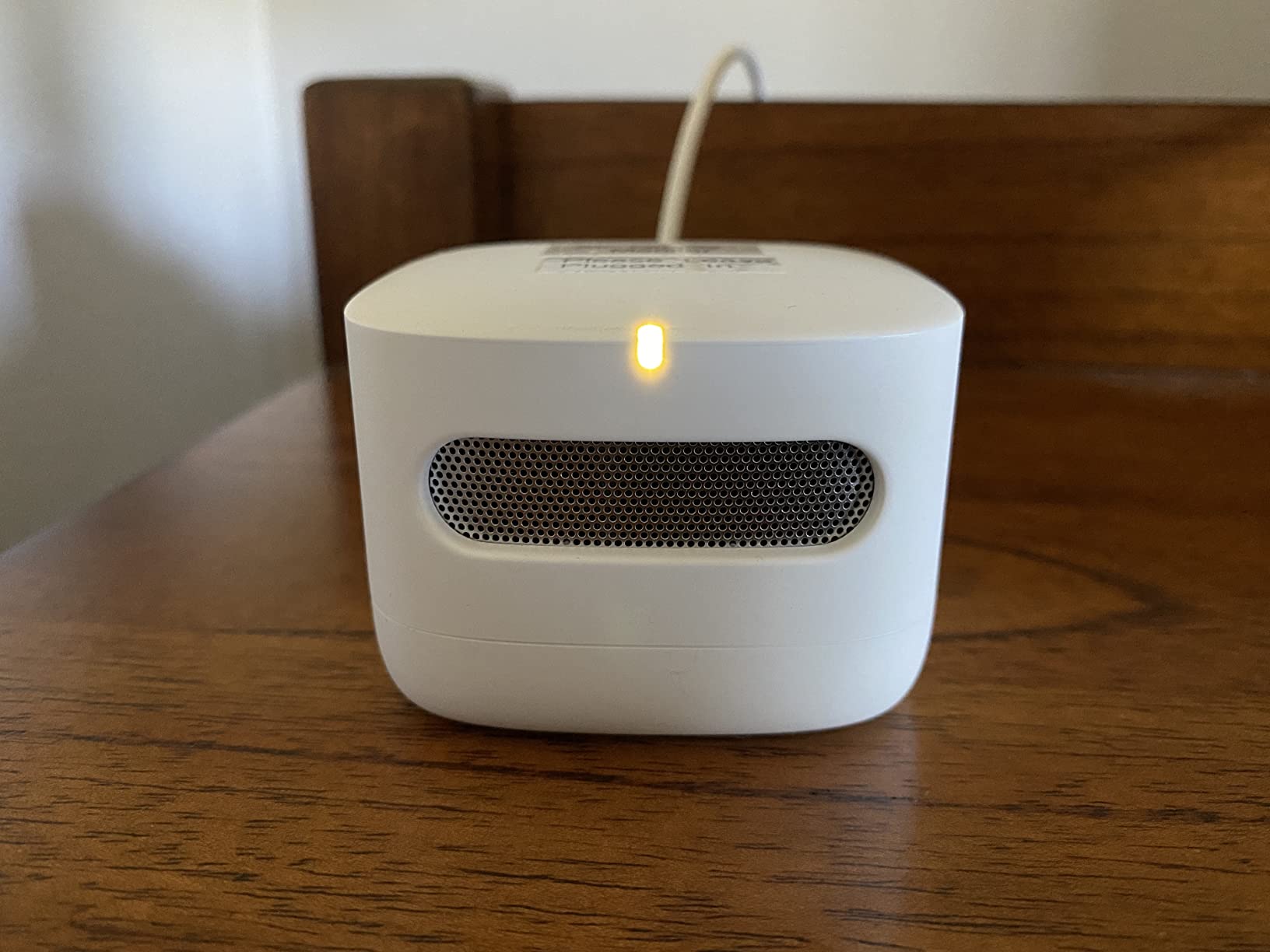
Turns orange/amber when air quality drops to moderate.
This monitor tracks carbon monoxide (CO), not carbon dioxide (CO2) — and the difference matters. CO2 is a normal byproduct of breathing and isn't life-threatening at typical indoor levels. CO is a byproduct of combustion and can be genuinely dangerous — this monitor is not a substitute for a dedicated CO alarm, and every home should have one regardless.
Everything about this device funnels through the Alexa app, and that's a real cost, not just a minor inconvenience. There's no web dashboard, no way to export the raw data, and no API if you wanted to do your own analysis. Navigating historical data — switching between hourly, daily, and weekly views — is clunky, and some owners have found the app resets to the current day every time you change the view granularity. If you just want a quick glance at the current reading, it's fine. If you want to dig into trends over time, it gets frustrating fast.
There's also a color-coded alert light that, according to some owners, can't be fully disabled — even with notifications and the display supposedly turned off, a red warning light can still activate when air quality drops. Worth knowing if you're sensitive to lights at night.
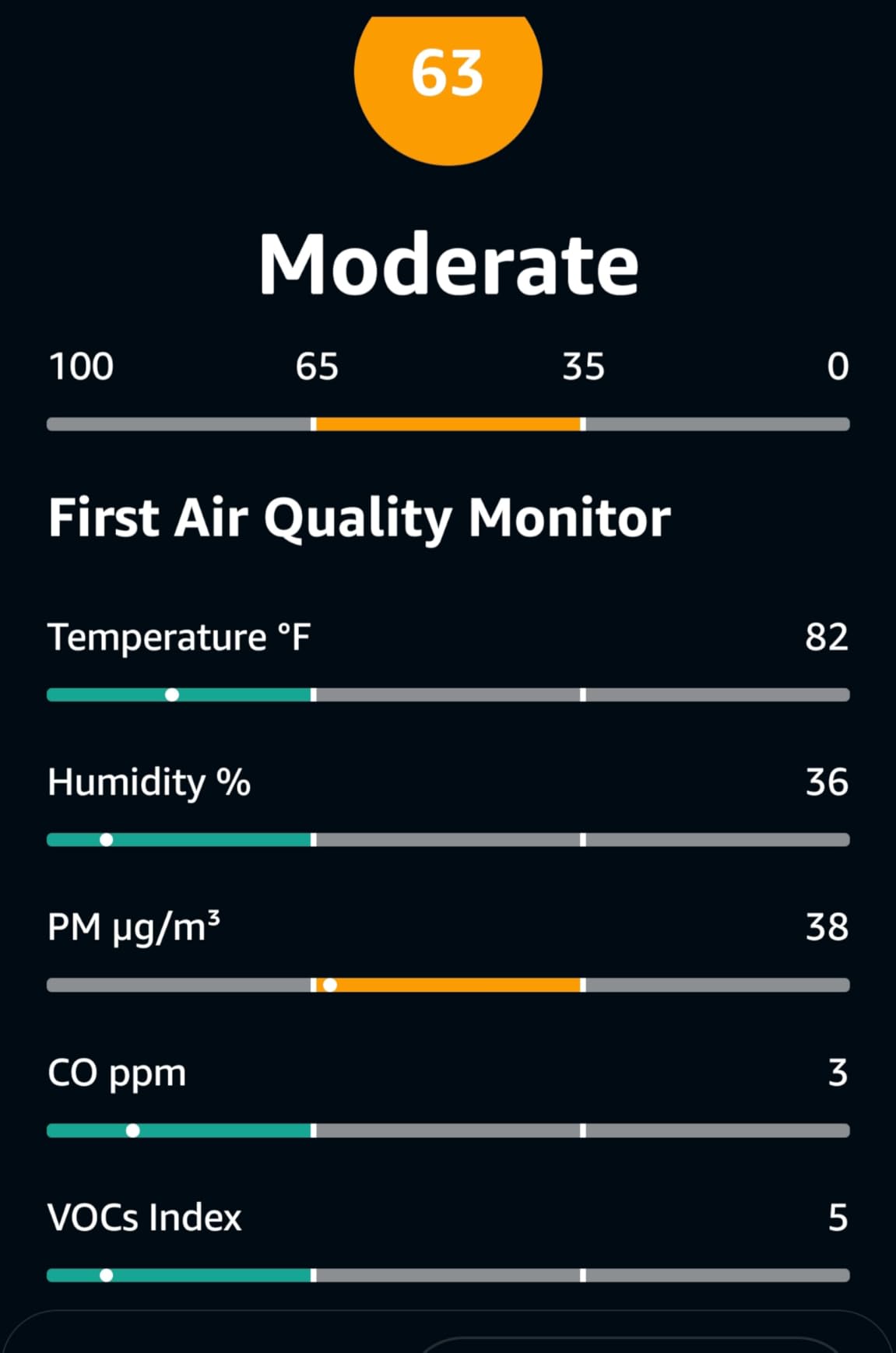
The Alexa app reading — air quality showing moderate at the time.
I don't have a lab-grade way to verify the particulate, VOC, or CO readings, so I'm largely trusting Amazon on those. What I can say is the temperature and humidity readings line up closely with my existing weather stations, which gives some confidence in the sensor's basic competence. For particulates and VOCs, treat the readings as directionally useful — good for spotting real changes — rather than precise lab measurements.
There's not much transparency about what data the device collects or where it goes. It's a fair concern for a device that's constantly monitoring your home environment, and Amazon doesn't go out of its way to clarify it in the product materials.
If you already have Alexa devices, deal with allergies or sinus issues, or live somewhere the air quality genuinely shifts with the seasons, this is a reasonable buy. If you don't use Alexa at all, or you want a device with a proper standalone app and data export, this isn't the one — you'd be fighting the ecosystem the whole time just to get basic use out of it.
| Brand | Amazon |
| Tracks | PM2.5, VOCs, CO, humidity, temperature |
| Overall Score | Combined air quality score in Alexa app |
| Indicator | Color-coded LED (green / yellow / red) |
| Requires | Alexa app for full functionality and history |
| Automation | Alexa Routines (purifiers, fans, dehumidifiers) |
| Data Export | None — no browser dashboard or API |
| Price | $69.99 |
Tracks PM2.5, VOCs, CO, Humidity & Temperature · Works with Alexa Routines
$69.99 Buy on Amazon → Affiliate link — commission at no extra cost to you.